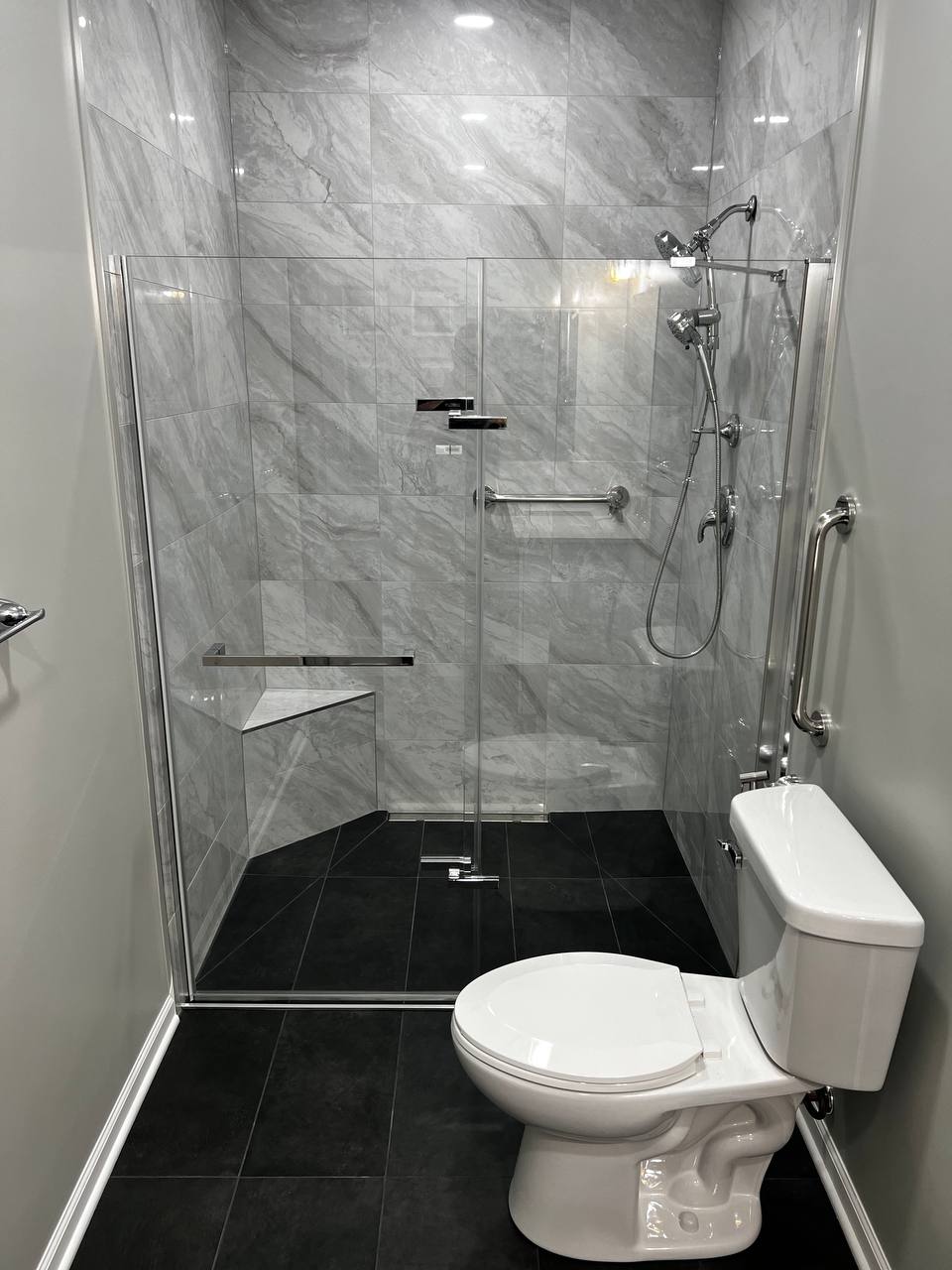
Walk-in showers have become the dominant bathroom upgrade request across Chicago's northwest suburbs over the past decade, and that trend is accelerating in 2025. Whether you're converting an old tub-and-shower combo or building out a brand-new primary bath in your Buffalo Grove home, a well-designed and properly waterproofed walk-in shower transforms not just the look but the function of the space. Here's what you need to know before you start planning.
Types of Walk-In Showers
Alcove showers are installed in a three-wall enclosure — typically where a tub was previously located. They're cost-effective because three walls already exist, and they work well in most standard bathroom layouts.
Corner showers use two existing walls and two glass panels, making them efficient in smaller bathrooms. A 36×36 corner shower can transform an unusable corner into a functional, attractive feature.
Walk-in wet rooms are open-format showers without a door — the floor is sloped toward a linear drain and the tile extends throughout the whole area. These work particularly well in large primary bathrooms and give a spa-like aesthetic that's extremely popular in higher-end homes across Glenview and Northbrook.
Custom built-in showers are sized and designed specifically for your space, with custom niches, benches, and any configuration you need. These are the most expensive option but deliver the most precise fit and the most impressive results.
Getting the Size Right
The minimum comfortable walk-in shower size is 36×36 inches. We recommend 36×48 as a practical minimum for daily use by adults. For a true luxurious feel, 48×48 or larger — with room for a bench — is the standard in the primary baths we install across Arlington Heights and Schaumburg. If space allows, a 60×36 or larger shower changes the entire character of the bathroom.
Waterproofing: The Most Important Step No One Talks About
Most shower failures — tile cracking, grout deteriorating, mold behind walls — trace back to inadequate waterproofing. The waterproofing membrane installed behind or on top of the cement board is what actually keeps water out of your wall cavity. There are three main approaches:
- Sheet membranes (Schluter KERDI, Wedi): pre-formed membranes bonded directly to substrate. Excellent and widely used by professional installers.
- Liquid-applied membranes (RedGard): rolled or painted onto the substrate in multiple coats. Effective when applied correctly to full thickness.
- Foam substrate systems (Schluter, Wedi): prefabricated foam boards that are both substrate and waterproofing. Expensive but extremely effective and fast to install.
At Hammer Remodeling, we use and recommend Schluter KERDI or liquid-applied RedGard systems depending on the specific project. We never install tile directly onto drywall in wet areas, and we never skip the waterproofing inspection before tiling begins.
Tile Selection for Walk-In Showers
The two most popular choices in 2025 are large-format porcelain tile (24×48 or 12×24) on shower walls and either the same large format or smaller mosaic tile on the floor. Large-format tile creates a clean, minimal aesthetic with fewer grout lines to maintain. Floor tile should have a coefficient of friction rating of at least 0.6 (DCOF) to be safe when wet — this rules out polished large-format tiles on floors.
Glass Options
Frameless glass is the premium option and the most popular. It uses 3/8″ or 1/2″ tempered glass with minimal hardware — the result is an open, clean look that makes even small showers feel larger. Cost: $800–$2,500 depending on opening size and glass type.
Semi-frameless uses a framed track at the top and bottom but minimal metal on the sides. Good mid-range option at $500–$1,200.
Frameless fixed panels (no door, with a wet wall) eliminate door hardware entirely and work well in larger walk-in configurations where the spray doesn't reach the opening.
What to Budget
A complete walk-in shower installation in a standard bathroom in the northwest Chicago suburbs typically costs $6,000–$16,000 depending on size, tile selection, and glass type. That includes demolition of the existing tub/shower, substrate and waterproofing installation, all tile work, glass enclosure, and plumbing trim. Call Hammer Remodeling at (331) 231-2157 to discuss your specific project and get a free estimate.
Hammer Remodeling LLC has served homeowners across Chicago's northwest suburbs for over 20 years. We specialize in bathroom remodeling, kitchen renovation, tile & flooring, and home repairs — with a licensed crew that does every project ourselves, no subcontractors.