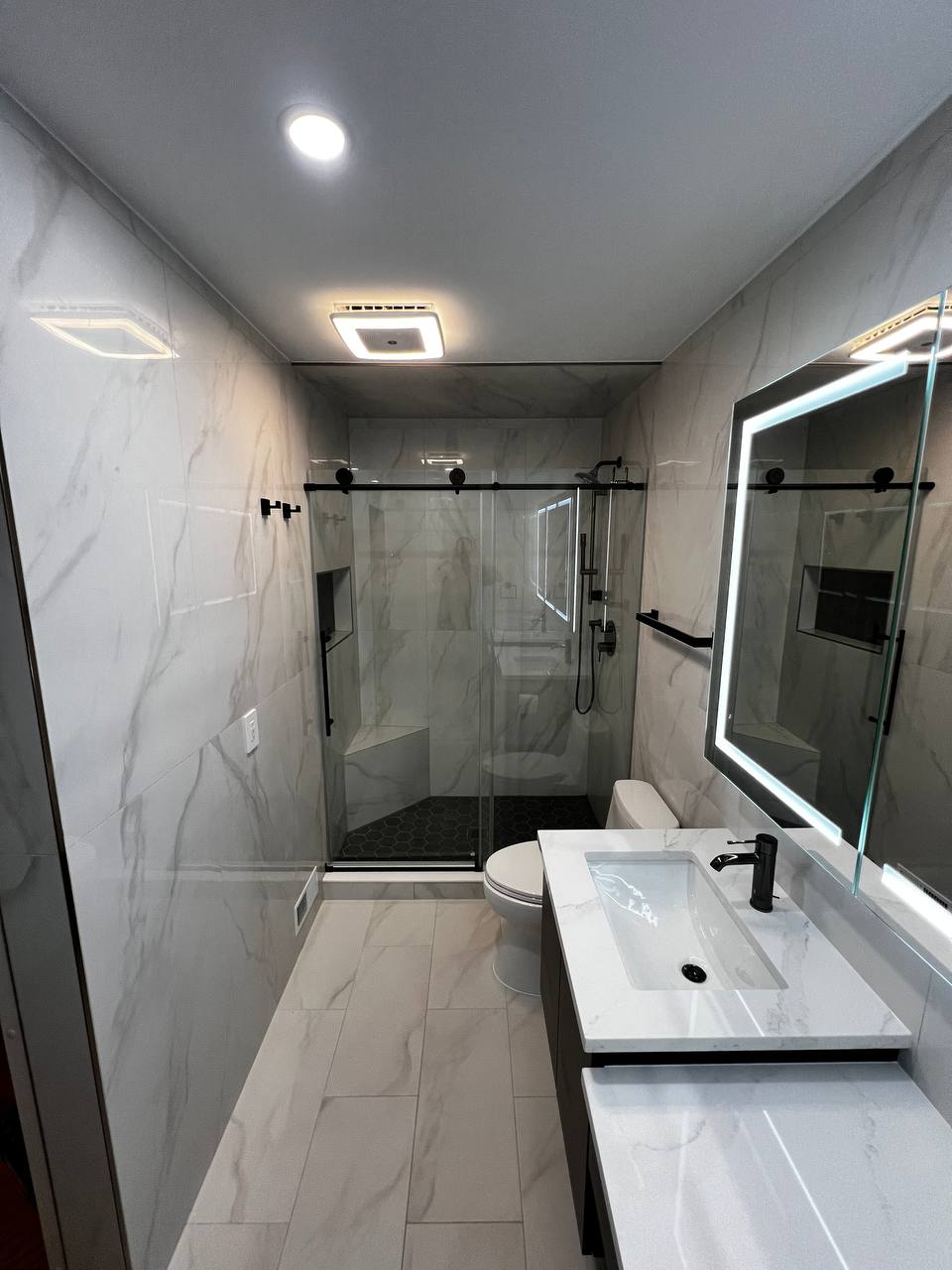
Most homeowners don't plan a bathroom remodel on a whim. It's usually a gradual realization — a growing list of small annoyances that eventually reaches a tipping point. The question is whether you recognize the signs early enough to remodel on your own timeline, rather than reacting to water damage, failed tile, or a plumbing emergency. Here are the 10 most reliable signs that your bathroom is overdue for a remodel — based on over two decades of working in homes across Buffalo Grove, Arlington Heights, Schaumburg, Palatine, and the greater NW Chicago suburbs.
1. Grout That Cracks, Stains, or Won't Stay Clean
Grout failures are one of the earliest warning signs of a bathroom past its prime. Hairline cracks allow moisture to penetrate behind tile — and once moisture gets behind tile, the damage compounds quickly. If you're re-grouting every year or scrubbing with bleach and still can't get the grout lines clean, the underlying substrate may already be compromised. Surface-level re-grouting doesn't fix the root problem.
2. Persistent Musty Odors or Visible Mold
Mold on the surface of tile or caulk lines can sometimes be cleaned. Mold inside the wall — behind tile that has failed waterproofing — cannot be cleaned; it has to be cut out. If you notice musty smells that persist even after thorough cleaning, or if you see dark stains returning within days of cleaning, moisture is living inside your walls. This is not a cosmetic problem; it's a structural one.
3. Flooring That Feels Soft, Spongy, or Uneven
A soft spot in a bathroom floor almost always means subfloor rot from years of water infiltration at the toilet seal, the tub surround, or the shower pan. Left unaddressed, this progresses into structural framing damage. By the time a floor feels noticeably spongy underfoot, you typically have rot in at least 10–30% of the subfloor. A remodel that includes proper waterproofing is the only real fix.
4. Your Fixtures Are Original to the 1980s or 1990s
Fixtures from this era are not just aesthetically dated — they're less efficient. Older toilets use 3.5–7 gallons per flush versus today's 1.28-gallon high-efficiency models. Older showerheads use 4–5 gallons per minute versus 2.0–2.5 gpm for modern low-flow heads. An aesthetic remodel frequently pays for itself in part through utility savings over 5–10 years.
5. There's Never Enough Storage
Builder-grade bathrooms from the 1980s and 90s were designed to function, not to live in. If you're stacking towels on the back of the toilet or keeping a portable shelf because there's nowhere else to put things, a remodel that reconfigures the vanity, adds a medicine cabinet, or builds in shower niches will transform daily life.
6. The Shower or Tub Surround Has Tile Lippage, Cracks, or Missing Grout
Tile that has shifted, cracked, or begun to separate from the wall in your shower or tub surround is not a repair-it-and-move-on situation. Movement in tile almost always means the substrate behind it has failed. Re-tiling over compromised cement board or drywall is a temporary fix that will fail again. The correct fix is demo down to the studs, proper waterproofing, and new tile installation.
7. Poor Ventilation Causes Constant Fogging and Moisture
Inadequate ventilation accelerates every form of bathroom deterioration — grout staining, caulk failure, paint peeling, mirror fogging. If your bathroom fan sounds like a truck engine but still doesn't move enough air, it's both inadequate and inefficient. Modern bath fans with humidity sensors and near-silent operation are a standard upgrade in any remodel we do.
8. The Layout Doesn't Work for Your Family Anymore
Bathrooms that made sense for the original owners of your 1970s split-level in Schaumburg may not work for a modern family. Converting an old tub-only bathroom to a walk-in shower, adding a double vanity, or expanding a cramped half-bath are layout changes that require a remodel but significantly improve daily function.
9. Caulk Lines Are Separating or Discolored
Caulk at the tub-wall joint, around the toilet base, and at floor transitions is a critical water barrier. Caulk that is pulling away from surfaces, has turned black with mold, or has hardened and cracked is no longer doing its job. While you can recaulk as maintenance, if the underlying surfaces are also deteriorating, recaulking is just delaying a larger repair.
10. You're Embarrassed When Guests See It
This is a perfectly valid reason. Your bathroom should be a space you're comfortable with. If you're apologizing for it when guests visit or avoiding looking at it yourself, that's a quality-of-life issue worth solving. In established communities like Arlington Heights, Buffalo Grove, and Northbrook, bathroom quality has a direct relationship with home value — an updated bathroom makes your home more competitive in a market where buyers have high expectations.
If two or more of these signs sound familiar, it's worth a conversation. Hammer Remodeling LLC offers free in-home estimates across all of Chicago's northwest suburbs. Call (331) 231-2157 or request an estimate online.
Hammer Remodeling LLC has served homeowners across Chicago's northwest suburbs for over 20 years. We specialize in bathroom remodeling, kitchen renovation, tile & flooring, and home repairs — with a licensed crew that does every project ourselves, no subcontractors.