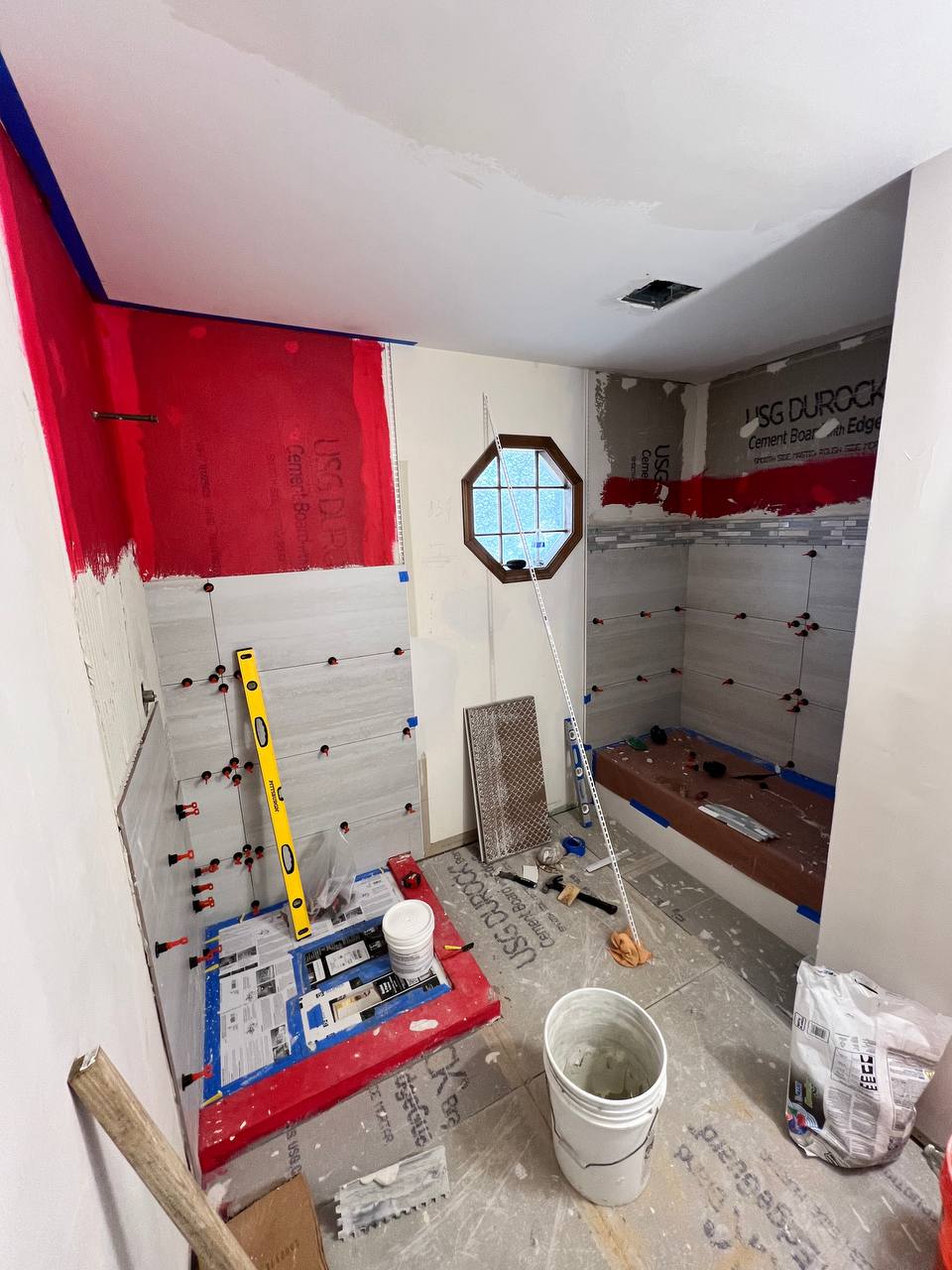
When we describe our approach to bathroom and kitchen remodeling across Buffalo Grove, Arlington Heights, and the northwest Chicago suburbs, the phrase that comes up most often — from clients who've worked with other contractors and from inspectors who've seen our work — is that it looks and feels "European." It's a genuine compliment, and it points to something real about how old-world trade practices differ from American builder-grade conventions. Here's what that difference actually means for homeowners in this region.
The Foundation: Substrate Quality Is Non-Negotiable
In European construction — particularly in Central and Eastern Europe, where our principal craftsmen were trained — the substrate is treated as the most important part of the work, even though it's the part no one ever sees. The floor system under your tile, the cement board behind your shower walls, the flatness and plumb of the surface receiving materials — these are not things to be rushed or shortcut. In American builder-grade construction, substrates are frequently "good enough." In the European tradition, they're either correct or they're redone.
The practical impact: our tile floors are flatter. Our shower walls are plumb. Our grout lines are consistent. None of this is visible in isolation, but the cumulative effect of all of it is a finished bathroom that looks more precise and more expensive than the materials alone would suggest.
Waterproofing as an Article of Faith
European tile setters — particularly those trained in the German and Austrian tradition — treat waterproofing in wet areas as an absolute, non-negotiable standard. Every surface that will be within reach of water receives proper membrane treatment, full stop. Not a quick coat of paint-on membrane, but a properly applied, properly cured, properly lapped installation using appropriate products (Schluter KERDI, Wedi, properly applied RedGard at sufficient thickness). This is not how most American remodeling contractors approach the work — for many, waterproofing is the step that gets done quickly, or partially, or sometimes skipped entirely in favor of "it'll probably be fine."
We have a saying: the waterproofing is done for the person who will open that wall in 30 years. Our customers tell us their bathrooms are still perfect 10, 15, and 20 years after we worked on them. That's not an accident.
Precision Tile Setting: The Eye Can Tell
Precision in tile work manifests in things the eye detects without being consciously aware of them: grout joints that are exactly consistent from top to bottom, cuts that are measured and made at the correct angle rather than approximated, tile alignment that accounts for the visual center of the wall rather than just starting from a corner. These details are the difference between a tile installation that looks professional and one that looks like a weekend DIY project.
Large-format tile — the dominant choice in northwest suburban bathrooms in 2025 — is particularly unforgiving of imprecision. A 24×48 porcelain tile installed 2mm out of plane at its leading edge will produce visible lippage that catches every shadow. Installing it correctly requires proper back-buttering, a mortar bed within tight tolerance, and a setter with the patience and skill to achieve it. This is where European trade training and American "fast and functional" approaches diverge most dramatically.
Attention to Transitions and Edges
Where two materials meet — tile to hardwood, tile to carpet, shower tile to wall paint, countertop to backsplash — is where the quality of a remodel is most visible. European-trained tradespeople are taught to treat transitions as features of the work, not as afterthoughts. Schluter edge profiles, precisely executed caulk lines, and carefully planned transitions are part of the original design, not solutions figured out at the end when materials meet awkwardly.
What This Means for Your Project in NW Chicago Suburbs
When you hire Hammer Remodeling LLC for a bathroom or kitchen project in Buffalo Grove, Schaumburg, Glenview, or anywhere across the northwest suburbs, you're hiring a team that was trained to a standard that doesn't compromise substrate quality, waterproofing, or precision for the sake of speed. Our projects take the time they need to take. We don't start the next step until the previous step meets standard. We pull permits, schedule inspections, and build our work to last 30+ years — not 10.
The difference is not always visible in photographs. It's visible in ten years. Call us at (331) 231-2157 to discuss your project and see examples of our work in person.
Hammer Remodeling LLC has served homeowners across Chicago's northwest suburbs for over 20 years. We specialize in bathroom remodeling, kitchen renovation, tile & flooring, and home repairs — with a licensed crew that does every project ourselves, no subcontractors.