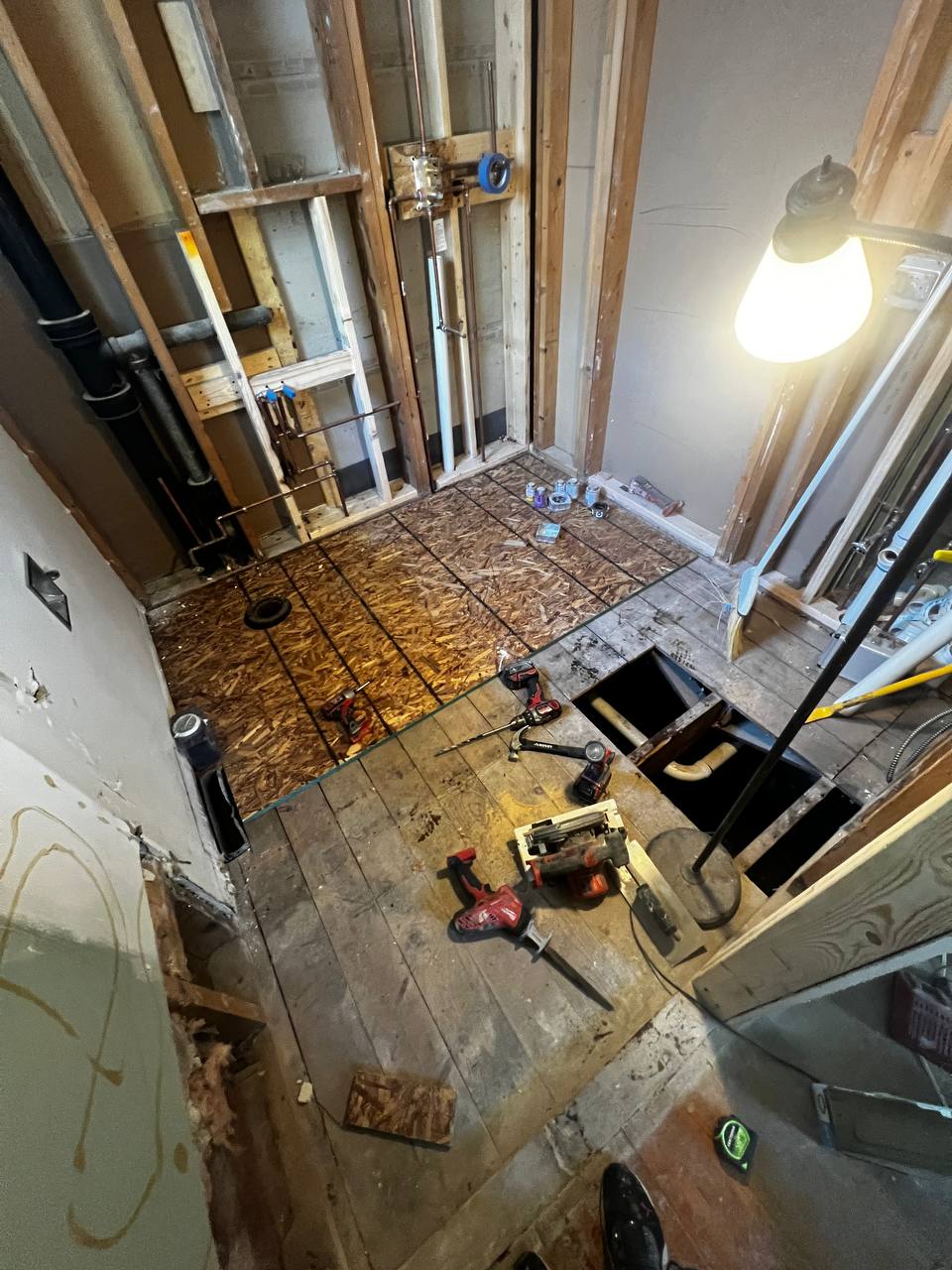
Twenty years of bathroom remodeling across Buffalo Grove, Arlington Heights, Palatine, and Schaumburg has given us an unusually good view of what goes wrong. Some mistakes are made by homeowners; others are made by contractors. Most are preventable with the right knowledge. Here are the 12 most common and most expensive bathroom remodeling mistakes we see — and how to avoid every one of them.
1. Choosing Tile Before Seeing It in Your Space
Tile looks completely different on a showroom floor under fluorescent lighting than it does on a wall in your bathroom under your specific light conditions. Always order samples — most suppliers charge only a few dollars — and view them in your actual bathroom before committing. This is especially important with large-format tile, where the scale effect is hard to visualize from a small swatch.
2. Skipping or Rushing Waterproofing
This is the most consequential mistake in bathroom remodeling, and it's entirely invisible. Inadequate waterproofing behind tile in the shower or around the tub leads to moisture in the wall cavity, which leads to mold, rot, and eventually structural damage. The repair cost when this fails is typically 2–4 times the cost of the original remodel. Proper waterproofing — Schluter KERDI, RedGard membrane, or equivalent — adds 1–2 days to a project and is worth every minute.
3. Underestimating Budget and Skipping the Contingency
A bathroom remodel almost always surfaces at least one unexpected cost: a rotted subfloor, outdated plumbing that needs updating, or an electrical panel issue. If your budget is stretched exactly to the estimate with nothing held back, one discovery can derail the whole project. Build in 10–15% contingency as a standard practice.
4. Hiring Based on Price Alone
The lowest bidder for your bathroom remodel in Arlington Heights or Schaumburg is almost certainly not delivering the same quality as the mid-range bidder. Experienced, licensed, insured contractors have real overhead costs that show up in their pricing. The difference between a $12,000 remodel from a reputable contractor and an $8,500 remodel from the cheapest bidder frequently manifests in: thinner tile adhesive application, skipped waterproofing steps, cheaper grout, and labor done by inexperienced helpers instead of skilled tradespeople.
5. Not Verifying License and Insurance
We've already covered this in detail — but it bears repeating because the consequences are severe. Unlicensed contractors cannot legally pull permits. If your remodel requires a permit (most do) and it's done without one, you own that problem at the time of sale.
6. Poor Ventilation Planning
An undersized or poorly placed exhaust fan is one of the most common oversights in bathroom remodels. The rule of thumb is 1 CFM per square foot of floor space, minimum. For a 60-square-foot bathroom, that's a 60 CFM fan — and most remodelers recommend sizing up to 80–110 CFM for a primary bath. Position the fan near the shower, not in the middle of the ceiling. A humidity-sensing fan that runs automatically after a shower is a meaningful upgrade for about $80–$150 more than a standard fan.
7. Choosing Trendy Over Timeless
In 2015, gray shiplap accent walls were everywhere. By 2022, they looked dated. Bathroom design choices that are extremely trendy at the moment of installation tend to age poorly. In a market like the northwest Chicago suburbs — where homes often sell 5–15 years after a remodel — choices that balance current style with timeless appeal consistently outperform cutting-edge trend choices in resale value.
8. Insufficient Storage Planning
Homeowners regularly focus on aesthetics and underinvest in storage. A beautiful bathroom that lacks practical storage for towels, toiletries, and cleaning supplies will frustrate you every day. Build in medicine cabinet(s), consider a vanity with maximum drawer space, and include niches in the shower design — these are best planned at the beginning, not added as afterthoughts.
9. Tile Layout That Wasn't Thought Through
Tile layout matters enormously to the final appearance. Tiles should be centered on the most visible wall, not started from a corner. Cuts should be balanced on both sides. The pattern direction should make sense for the room proportions. These decisions need to be made — and approved by you — before tiling begins, because undoing a tiled shower is a full demolition.
10. Making Changes Mid-Project
Scope changes mid-project — "can we change the tile we already ordered?" or "let's move the vanity to the other wall" — are one of the leading causes of budget overruns and schedule delays. Front-load your decision-making in the planning phase. Once demo begins, changes cost significantly more than they would have in the planning stage.
11. Not Having a Second Bathroom Plan
If the bathroom being remodeled is your only bathroom, plan for the 10–14 day disruption before the contractor starts. Gym membership, hotel for a few nights during demo, or a friend's house — not having a plan creates stress that spills into the project.
12. Not Getting Everything in Writing
A handshake and a verbal agreement is not a contract. Your remodeling contract should specify: scope of work, materials to be used (by brand and product number where possible), payment schedule, start date, estimated completion date, and change order procedure. If a contractor balks at a written contract, that's a serious red flag. Call Hammer Remodeling at (331) 231-2157 — every one of our projects starts with a clear, detailed contract.
Hammer Remodeling LLC has served homeowners across Chicago's northwest suburbs for over 20 years. We specialize in bathroom remodeling, kitchen renovation, tile & flooring, and home repairs — with a licensed crew that does every project ourselves, no subcontractors.